
Guiding Road Recovery Center

Men-Only Treatment Programs: What Gender-Specific Care Actually Changes

A men-only treatment program treats only men, so every group, meal and living space is all-male. Here is what that setting actually changes, what a week inside one looks like, how families stay involved, and when it is not the right call.

Table of Contents

Share

Recovery Starts at Guiding Road

A men-only recovery center in Phoenix and Scottsdale clinical care, holistic practice, and hands-on leadership from intake through aftercare.

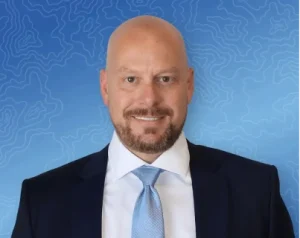
Picture of Bobby Boykin, MS, LASAC, CRS

Bobby Boykin, MS, LASAC, CRS

This article has been clinically reviewed by our Executive Director, Bobby Boykin, a Licensed Associate Substance Abuse Counselor (LASAC) and Certified Recovery Specialist (CRS) at Guiding Road.

A men-only treatment program is addiction treatment delivered in an all-male setting, where every group, every peer and usually every housemate is another man in treatment. Guiding Road runs its program that way across residential, partial hospitalization, intensive outpatient and supportive housing for adult men 18 and older, including men who are also being treated for a co-occurring mental health condition. This page covers what the setting changes, what a week inside the Phoenix program looks like, and how to tell whether it fits. One thing it does not include is detox.

Quick answer

What is a men-only treatment program?

A men-only treatment program treats only men, so every therapy group, meal and living space is all-male. The clinical methods are standard ones. What changes is the room they happen in, and what a man will say once he is in it. Guiding Road runs a men-only program in Phoenix for adults 18 and over, built on an abstinence-based, 12-step-immersive model and accredited by The Joint Commission for behavioral health care.

If this is an emergency

If you or someone you know is in a medical emergency, call 911. The 988 Suicide and Crisis Lifeline is available 24/7 by call or text.

Key takeaways

The short version

  • Men-only describes who is in treatment, not who provides it. Guiding Road's Chief Clinical Officer, Karen Lee Williams, LPC, is a woman.
  • Men carry the heavier share. In 2024, 16.4 million men aged 18 and over had alcohol use disorder against 10.7 million women, and men died of drug overdose at more than twice the rate.
  • The clinical case is specific. SAMHSA published a treatment protocol on it, TIP 56, as the companion to the volume written for women.
  • Guiding Road does not provide detox on site. Detox is coordinated as specialty care with medical partners.

Why an all-male room changes what gets said in it

Men are not harder to treat. The point is that men arrive carrying a set of things they were taught not to say out loud, and a mixed room raises the cost of saying them. That cost is the problem.

SAMHSA treats this as a clinical subject rather than a preference. Its Treatment Improvement Protocol 56, Addressing the Specific Behavioral Health Needs of Men, was published as the companion volume to TIP 51, which does the same work for women. Two protocols, one for each, is the tell that this is about matching the setting to the person.

Three things surface faster in an all-male group. Shame about what the substance use cost the people at home. Fear about work and money. Fear about being the person everyone else depends on. And the unglamorous business of having caused harm, which is hard to say in front of an audience a man is still trying to impress.

None of that is automatic. A group of men can perform for each other as easily as anyone else. It works when the program is built to push past the performance, which is why the structure below matters more than the label.

Men also arrive later. Asking for help reads as a failure of what many men were raised to be, so it gets postponed until a job or a court date forces it. That delay is part of why stigma keeps men out of treatment long after the people around them can see the problem.

What men-only programs are built to treat

The first is scale. The 2024 National Survey on Drug Use and Health, reported by the National Institute on Alcohol Abuse and Alcoholism, found 16.4 million men aged 18 and over with alcohol use disorder in the past year, or 12.9 percent of adult men, against 10.7 million women, or 8.0 percent. The gap in overdose deaths is wider. The National Center for Health Statistics reported an age-adjusted drug overdose death rate of 32.2 per 100,000 for males in 2024 and 14.1 for females, more than double.

The second is what comes with it. Guiding Road treats adult men who are also managing a co-occurring mental health condition, and treating the two together rather than in sequence is the clinical standard, set out in SAMHSA's TIP 42. Depression and anxiety the substance was quietly medicating tend to surface in the first weeks, which is when a program either has co-occurring disorder treatment built in or does not.

One thing a men-only program at Guiding Road does not do is detox. Detox is coordinated as specialty care with medical partners, and treatment starts when a man is medically stable.

What a week actually looks like

Residential runs on a set schedule rather than an open one. This is the weekday shape at Guiding Road, and it is what families ask about most, because it answers what he will actually be doing at 10 in the morning.

  • 9:00am Goals and meditation

    The day opens the same way every weekday. Morning prayer and meditation are invitational, and there is an optional Christian Track. Nobody is required to take part. Guiding Road is spiritually inclusive and is not a faith-based program.

  • 10:00am Small process group

    Every weekday. This is the all-male room doing the work described above, and it is the reason the schedule is built around a fixed morning slot rather than a floating one.

  • 11:30am to 3:30pm Clinical and physical work

    Psychoeducation, clinical assignments, and a 12-step speaker on property twice a week. Cognitive behavioral therapy, dialectical behavior therapy and motivational interviewing each run twice a week, with solution-focused brief therapy and rational emotive behavioral therapy weekly, plus one individual session. A physical trainer works with the group four times a week. A psychiatric nurse practitioner sees every client weekly for medication management.

  • 4:00pm to 5:30pm Free time, then dinner

    Meals are designed by a dietician. There is a gym at the house and at the clinic, and a sauna.

  • 7:00pm Twelve-step meeting

    Daily, off property. Sponsors are assigned, step work is required, and the clinical curriculum is deliberately intertwined with the steps, so clinical assignment three follows completing step three.

  • 9:00pm Nightly review

    The day closes at the same time it opened, on a schedule. Lights out is 10:30pm.

Does a men-only program shut families out?

No. Family programming is a scheduled part of treatment rather than a visiting policy. Clients are encouraged to have a minimum of two family sessions per month when clinically appropriate, and couples therapy is available where clinically indicated.

The curriculum covers communication, boundaries, family disease, relapse warning signs and rebuilding trust. A Family Day workshop is rolling out in the fourth quarter of 2026, and some families keep meeting with their loved one's therapist after discharge.

Day-to-day contact is more open than most people expect. A man has no phone for the first five days unless he is transferring in from another facility, then has full access, with phones placed in a basket during group times. Saturday afternoons are visitation. For the family side, Guiding Road keeps resources for families.

Signs it is worth a call

How to tell whether the fit is right

Any one of these is a reason to talk it through rather than wait for the next thing to go wrong.

  • He has tried to stop on his own more than once and has not got past the first week.
  • There is a mental health condition in the picture, treated or untreated, alongside the substance use.
  • He talks more honestly to men than to mixed company, which is clinical information rather than a personality quirk.
  • Outpatient has been tried and the structure was not enough.
  • The people at home have started organizing their lives around his use.
  • He is willing, even reluctantly. Reluctance is normal and workable. Flat refusal to engage with 12-step work is screened during pre-admission, because it signals a poor fit with this model.

If several of these land, what the admissions process involves is the next thing to read.

When a men-only program is not the right call

He needs detox first. If he is physically dependent, withdrawal is a medical event and is managed before treatment starts. Guiding Road does not provide detox on site. The admissions team coordinates it with a medical partner, and treatment begins once he is stable.

Medication is central to his plan. Medication-assisted treatment is an evidence-based approach for opioid and alcohol use disorder with strong clinical support behind it. Guiding Road's program is abstinence-based and 12-step-immersive, and medication-assisted treatment is not offered here. A man for whom medication is the right clinical answer is better served by a program built around it, and the admissions team will say so on the phone.

The 12-step model is not something he can work with. The clinical curriculum is woven through the steps, so a man who cannot engage with that is doing the program with half the structure missing. Worth establishing before admission, not four weeks in.

A men-only setting is also not a substitute for clinical content. If a program's only distinguishing feature is that it is all-male, the setting is doing work the treatment should be doing.

For the fuller picture of the program itself, see men's residential treatment in Phoenix.

Common questions about men-only treatment programs

Does a men-only program mean there are no women on staff?

No. Men-only describes the client population, not the clinical team. Guiding Road's Chief Clinical Officer is Karen Lee Williams, LPC, and women work throughout the program as therapists and staff. The all-male part is who is in group with him and who he lives alongside. People routinely hear those as the same thing. They are not.

What happens if he needs detox first?

Guiding Road does not provide detox on site. It is coordinated as specialty care with medical partners, so if withdrawal needs medical management, the admissions team arranges that first and treatment starts once he is stable. This is the most common wrong assumption about a residential program, and it is worth settling on the first call rather than on arrival.

What are the first five days like?

He has no phone for the first five days, unless he is transferring in from another facility. After that he has full access, with phones going into a basket during group times. The point is not punishment. The first week is when the schedule has to become the thing holding him, and a phone is very good at pulling a man back into what he just left.

How long does someone usually stay?

Length of stay is a clinical decision rather than a fixed package, and it is set with him after admission. Federal treatment guidance is direct about why: remaining in treatment for an adequate period of time is critical. Guiding Road offers residential treatment, partial hospitalization, intensive outpatient and supportive housing, so the level of care steps down as he stabilizes.

Is this the same as a court-ordered program?

No. Court involvement is a route into treatment, not a type of treatment. Some men arrive with a legal matter attached, others because their wife, mother or employer had a conversation with them. The program is the same either way, and being required to attend does not put a man in a different group.

Can he stay in contact with his family?

Yes, as often as he and his family wish, limited only where it is clinically indicated. That is separate from family programming, which is scheduled clinical work: a minimum of two family sessions per month when appropriate, covering communication, boundaries, relapse warning signs and rebuilding trust. Contact and family therapy are different things and a program should offer both.

What does the first admissions call actually cover?

What he is using and how much, what else is going on medically and psychiatrically, whether detox needs to come first, and what level of care fits. Fit with an abstinence-based, 12-step-immersive model gets discussed honestly, because resistance to 12-step work is screened before admission rather than discovered later. The admissions team is reachable at (480) 588-2328.

Sources

  1. Substance Abuse and Mental Health Services Administration. (2013). TIP 56: Addressing the Specific Behavioral Health Needs of Men. HHS Publication No. SMA 13-4736. ncbi.nlm.nih.gov
  2. National Institute on Alcohol Abuse and Alcoholism. (2024). Alcohol Use Disorder (AUD) in the United States, from the 2024 National Survey on Drug Use and Health. niaaa.nih.gov
  3. National Center for Health Statistics. (2026). Drug Overdose Deaths in the United States, 2023 to 2024. NCHS Data Brief No. 549. cdc.gov
  4. Substance Abuse and Mental Health Services Administration. (2020). Substance Use Disorder Treatment for People With Co-Occurring Disorders. Treatment Improvement Protocol 42. ncbi.nlm.nih.gov
  5. National Institute on Drug Abuse. (2018). Principles of Drug Addiction Treatment: A Research-Based Guide, third edition. nida.nih.gov
  6. American Society of Addiction Medicine. The ASAM Criteria. asam.org
Admissions

Get Help at Guiding Road

If you are weighing a men-only program for your husband, your son or yourself, the admissions team can talk through what level of care fits and whether detox needs to come first. Guiding Road offers residential treatment, partial hospitalization, intensive outpatient and supportive housing for adult men 18 and over. Detox is coordinated with medical partners. Recovery is possible and the work is real.

11402 N Cave Creek Rd, Suite 200, Phoenix, AZ 85020 · Men's residential treatment in Phoenix

Bobby Boykin, Executive Director of Guiding Road Recovery Center

Clinically Reviewed by

Bobby Boykin, MS, LASAC, CRS

Executive Director, Guiding Road Recovery Center

Clinical content on this page, including the description of co-occurring treatment and the levels of care, is reviewed by Guiding Road's Executive Director.

Resources

Helpful resources to you

September 17, 2026

Signs of a Fentanyl Overdose

Fentanyl is 50 to 100 times more potent than morphine, so an overdose can

September 11, 2026

Kratom vs 7-OH Withdrawal: How They Differ

7-hydroxymitragynine is under two percent of a kratom leaf’s alkaloid content. Concentrated 7-OH products

September 10, 2026

7-OH vs Kratom Leaf: What Is Actually Different

7-OH is not kratom leaf. It makes up under two percent of the plant’s
Skip to content